colour · September 23, 2026
Reading the Colour of the Season
Oxblood is back on our desks, and not by accident. Where a season's colour comes from, how it migrates from cloth to lip, and why we stopped trusting forecasts.
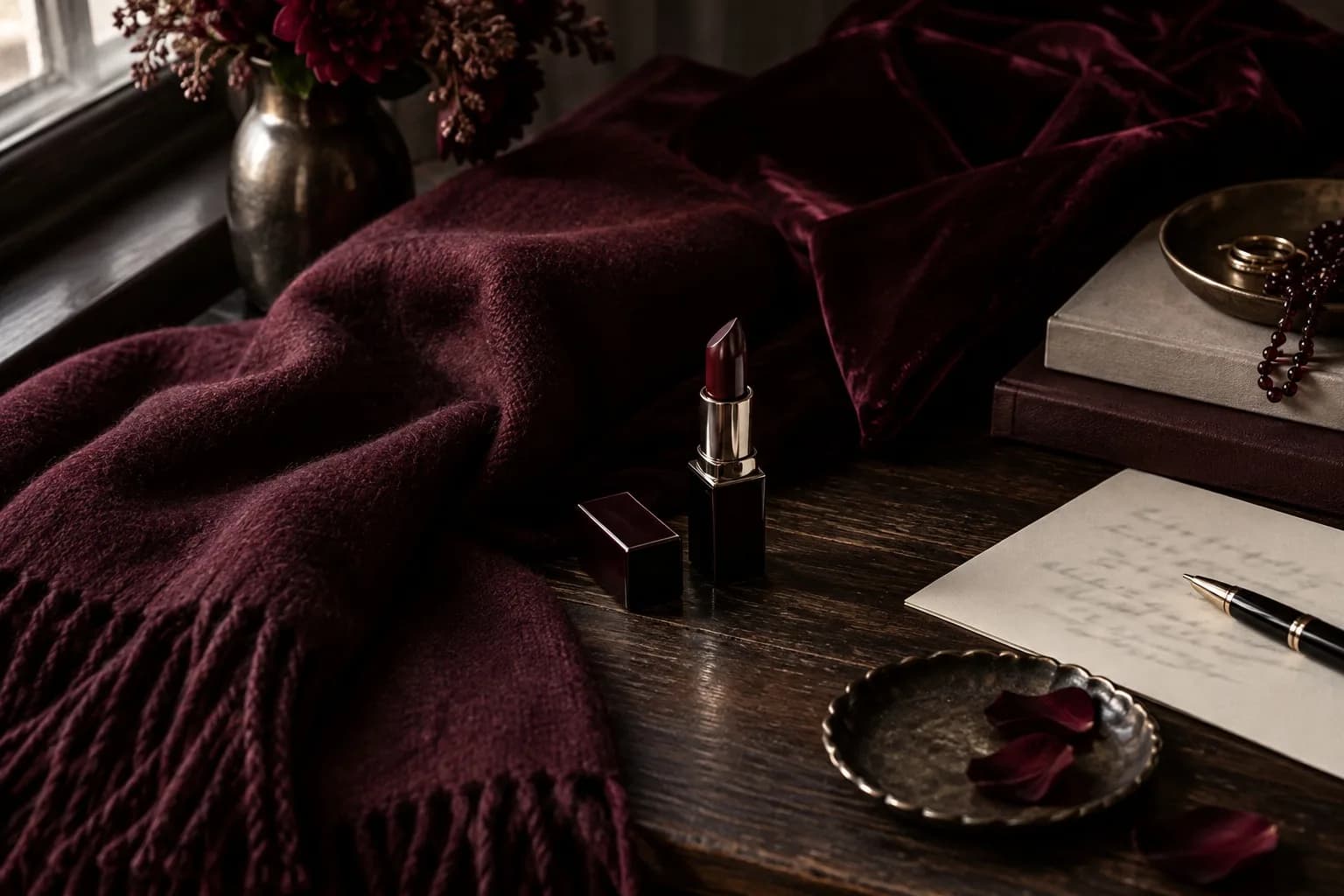
Every September, the same ritual. Someone on the editorial floor lays out swatches, someone else opens a window, and we begin the argument about which colour has quietly taken over. This year the answer arrived without much debate. It is oxblood.
Not red, which is loud. Not burgundy, which has been done to death. Oxblood sits lower, in the part of the spectrum where red is close to brown and the eye reads it as warmth rather than alarm. It is the colour of old leather, of a closed door in a good hotel, of the inside of a violin case.
Where it comes from
We stopped trusting forecasts years ago. A colour does not arrive because a committee announced it. It arrives because enough people, in enough places, begin reaching for it at the same time.
What we do instead is look. On the cutting-room floor, which colours get ordered twice. In the dye house, which pots are in demand. On the street, which scarf is being worn on the third cold morning. The season's colour is a pattern in behaviour, and you can only see it when you stop looking for it.
Why autumn needs it
There is a logic to this. As the light drops, the eye hungers for depth. Pale colours that glowed in July now look washed out. Dark, saturated tones hold their ground against the grey. Oxblood and berry do something particular: they warm skin in low light, and they sit comfortably beside the ochre of changing leaves.
That is not science, just habit. But it is a very old habit, and the people who dyed cloth centuries ago appear to have shared it.
From cloth to lip
The migration is the most interesting part. A colour that begins in a bolt of wool turns up, a few weeks later, in a lipstick, in a nail polish, in a painted door. It does not travel by instruction. It travels because wearing it on the body is easier than wearing it as a jacket.
A deep red lip is the quickest way to bring a season's colour to your face. Choose one with a hint of brown rather than blue, so it sits warm against the skin. Apply it with a brush, blot once, and leave the rest of your face quiet. Let the colour be the entire sentence.
How to wear it without trying
Keep it to one piece. An oxblood coat, or bag, or scarf, but not all three.
Pair it with cream, grey or navy. It sulks next to black and sings next to camel.
If it feels too dark, add a thread of something lighter nearby: a pale shirt, a gold chain.
Let it age. Like the leather it resembles, oxblood improves with wear.
The same logic of restraint runs through the styling advice in One Jacket, Three Ways. And for the full season in six looks, turn to the lookbook.
No comments yet
Comments are open. Have a thought or a question? Share it below.