fabric · August 29, 2026
Fabric Weights, Explained Without the Jargon
Light, mid, heavy: what the numbers on a swatch actually mean, how weight changes the drape of a garment, and the one test any reader can do in a shop.
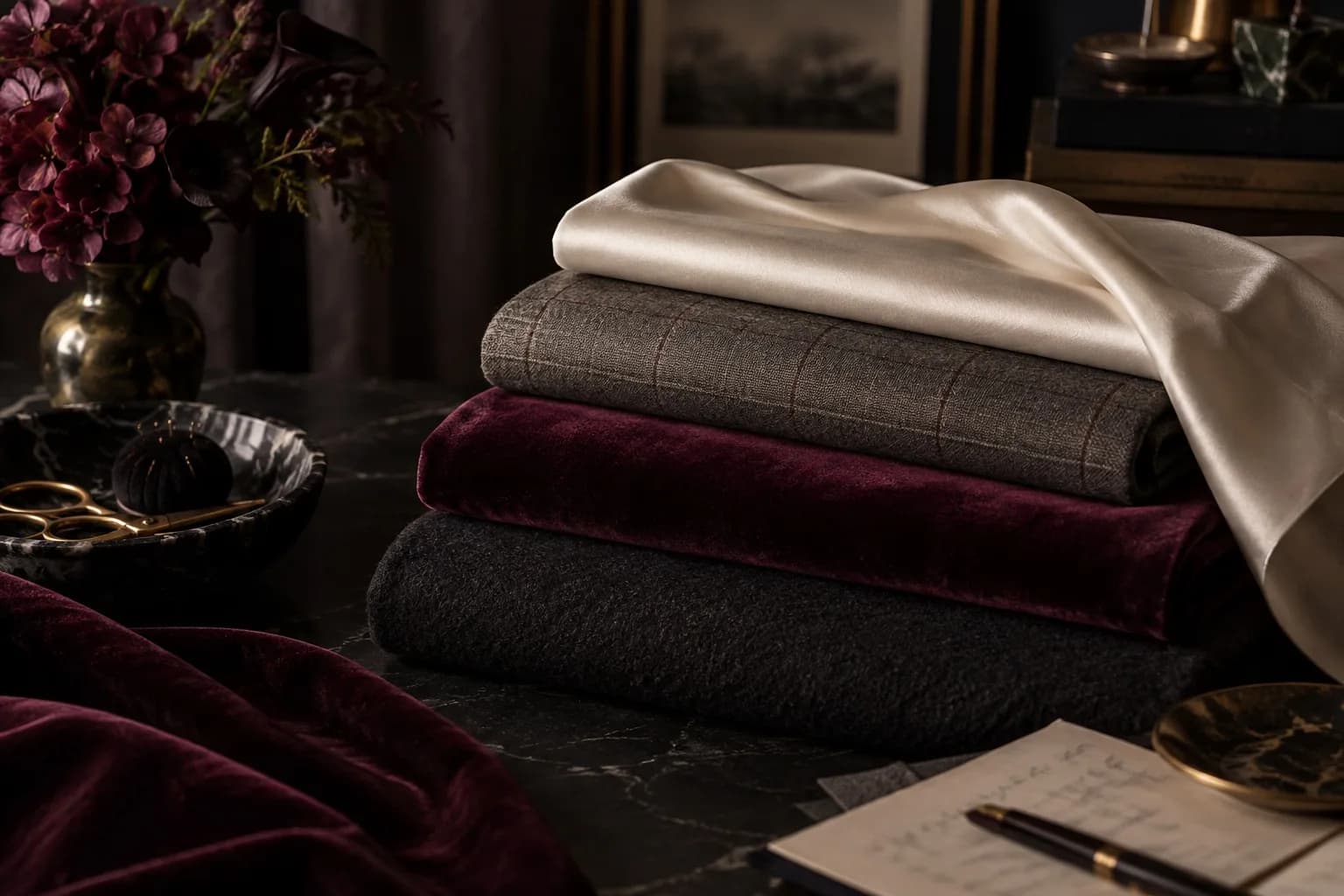
Open any swatch book and you will meet a column of numbers that nobody explains. They are weights, measured in grams per square metre, and they tell you more about a garment than the colour ever will.
Weight is not quality. A heavy cloth can be poor and a featherweight one exquisite. What weight tells you is behaviour: how a fabric hangs, how warm it is, how it creases, and what season it was born for. Learn that, and you can read a shop rail like a menu.
The simple scale
We use a plain rule of thumb at the magazine, which is our own and not a standard. Think of cloth in three families.
Light. Silks, lawns, fine cottons, summer linens. They float. They move before you do. They show every line beneath, so they ask for good tailoring or none at all.
Mid. Flannels, twills, gabardines, most suiting. This is the workhorse range, where cloth is substantial enough to hold a seam but soft enough to drape. If you could own only one weight, this is it.
Heavy. Tweeds, melton, boiled wool, thick velvet. They stand away from the body. They hold a line and a temperature. They also dominate a small wardrobe, which is why you rarely need many.
What weight does to a silhouette
A light cloth follows the body. A heavy cloth makes its own shape. This explains why a coat in a dense wool can be cut sculptural, with a wide skirt that swings, while the same pattern in silk would collapse into a puddle.
It explains the opposite too. A slim shirt in heavy cotton will sit stiff and fight your shoulders, while the same cut in a lighter weight settles and sighs.
The seasons are not the whole story
Warmth is not simple weight. A closely woven mid-weight wool can be warmer than a loose heavy one, because the structure traps air. A fine merino knit is one of the warmest things you can wear and barely weighs a thing. When you are shopping, ask what the cloth is doing, not only what it weighs.
At the Corvane atelier, the cutters keep a private rule that anything above about 450 grams is a coat cloth and everything below is a jacket. It is a house habit, invented by one old cutter and kept out of loyalty. We mention it because it shows how people who live with cloth talk about it, which is rarely in numbers.
The thirty-second test
In a shop, take a corner of the fabric in your hand and scrunch it tightly for five seconds. Let go. Watch what happens. If it springs back, it has life. If it holds every crease, it will look tired by noon. Then hold it up to the light. Is the weave even? Can you see daylight through the cloth? Then lay it over your forearm and notice how it falls.
It is not scientific. It is better than guessing. Pair it with the coat advice in The Coat That Outlasts the Trend, and a good wardrobe is within reach.
To see where these cloths come from, our visit to the atelier at Corvane is the next chapter.
No comments yet
Comments are open. Have a thought or a question? Share it below.